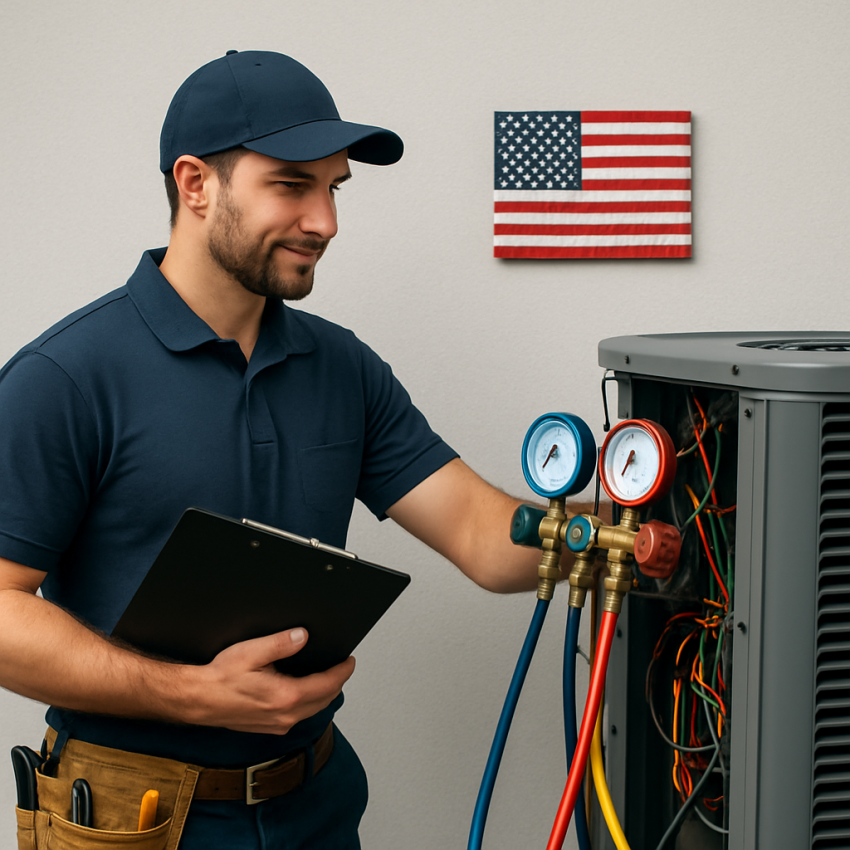
Why HVAC Is a Smart Move for Service Members and Veterans Using the GI Bill
The heating, ventilation, and air conditioning field is one of the most reliable gateways into the skilled trades, blending mechanical aptitude, problem-solving, and customer service. For transitioning service members and veterans, GI Bill approved HVAC programs offer a direct route to a stable, well-paying career with advancement potential. Employers value the discipline, situational awareness, and mission-first mindset developed in uniform—traits that map naturally to diagnostic precision, safety protocols, and jobsite leadership in HVAC.
Demand for HVAC technicians remains strong nationwide, fueled by growth in residential construction, retrofits of aging systems, and the rapid adoption of high-efficiency heat pumps. Energy codes are tightening, utility rebates are expanding, and customers expect quieter, smarter, and more efficient comfort systems. That combination keeps skilled installers, service technicians, and commissioning specialists in demand across seasons. With additional training, technicians can progress into lead installer roles, field supervisors, system designers, estimators, energy auditors, and even small business owners.
HVAC also delivers a satisfying blend of hands-on work and technical depth. A single day can include brazing line sets, verifying airflow with a manometer, charging a system to manufacturer specs, and walking a homeowner through a thermostat. The growing emphasis on heat pump technology (including cold-climate units) and low-GWP/A2L refrigerants means the field is evolving—keeping skills sharp and opportunities open. That evolution rewards techs who can read wiring diagrams, measure static pressure, apply load calculations correctly, and commission systems that perform to rating.
From a training perspective, programs that mirror real jobsite conditions speed up the transition from classroom to crew. Look for labs that simulate duct design and layout, furnace fundamentals, electrical troubleshooting, and refrigerant circuit diagnostics. Veterans accustomed to structured learning thrive in competency-based environments with clear performance standards: pull a vacuum to target microns, calculate total external static pressure, or verify superheat/subcooling within tolerance. Pair that with customer communication and safety, and you have a career-ready skill set that employers want on Day One.
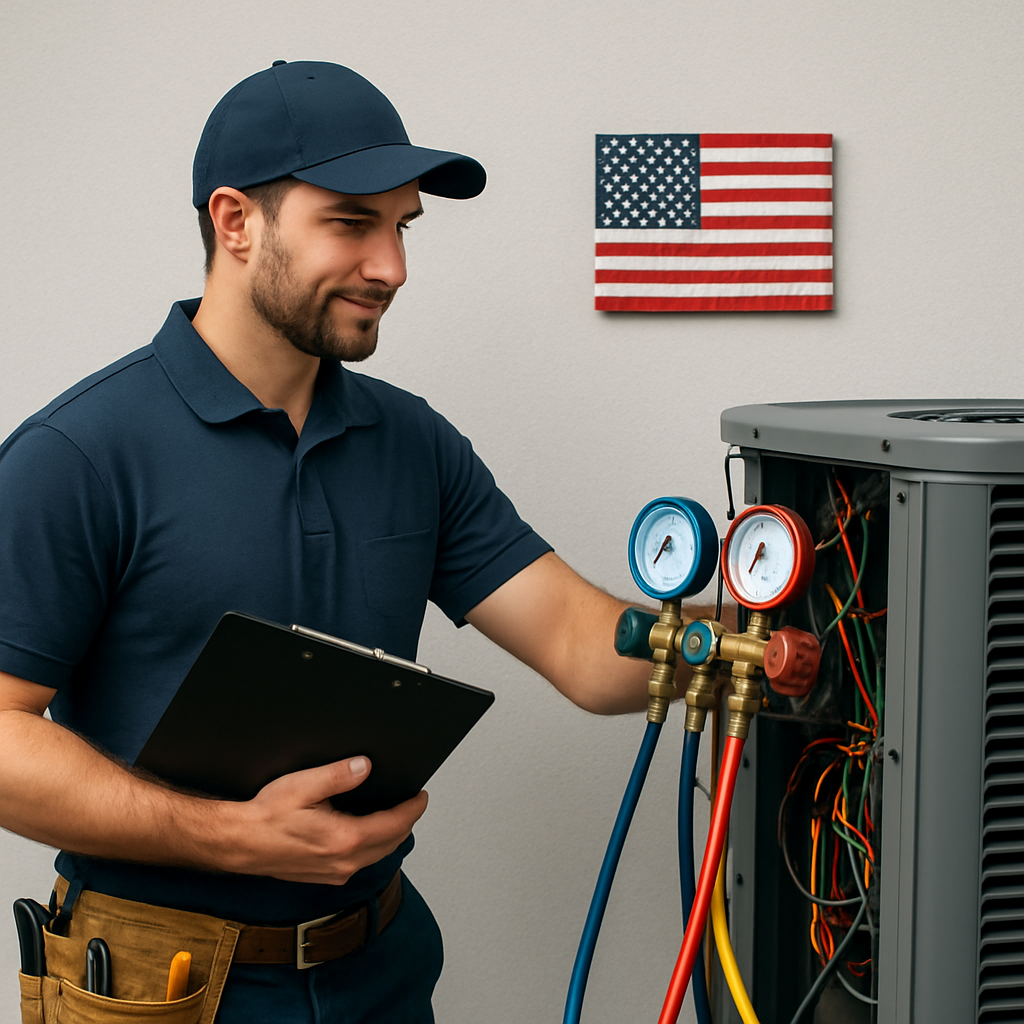
Understanding GI Bill Benefits for HVAC Training: Eligibility, Costs, and Formats
The GI Bill can cover a wide range of HVAC education paths, from short, intensive certificate courses to longer diploma programs and even apprenticeship or on-the-job training (OJT). Most veterans use the Post-9/11 GI Bill, which pays tuition and fees directly to the school (subject to annual caps for certain institutions), and provides a Monthly Housing Allowance based on the school’s location and your training mode (in-residence vs. online). A separate books and supplies stipend can help offset materials costs. The Montgomery GI Bill and other VA education benefits may also apply, depending on individual service history.
Not all training providers qualify, so the key is choosing VA-approved offerings. Non-college degree programs, clock-hour schools, and trade academies can be eligible if they’ve been reviewed and approved by your state approving agency. For hybrid and online formats, be sure to confirm how “in-residence” time is defined because it can affect housing allowance. Testing fees for required licenses or certifications—such as EPA Section 608—may be reimbursable by the VA, which helps reduce out-of-pocket costs during the credentialing process.
Apprenticeship and OJT pathways can also be funded through VA education benefits. In these models, an employer pays wages while the VA pays a monthly benefit to the trainee that gradually decreases as the trainee’s wages rise over time—an effective way to “earn while you learn.” Many HVAC employers partner with regional training providers or run in-house programs aligned to industry standards, combining classroom theory, hands-on labs, and mentored field work. This structure suits veterans who want immediate field exposure while building credentials over time.
To get started, verify a program’s status in the VA’s search tool, then speak with the school certifying official to understand tuition, fees, and program length. Submit your application (VA Form 22-1990 for most first-time users), obtain your Certificate of Eligibility, and coordinate enrollment so the school can certify your attendance. If you have a service-connected disability, Vocational Rehabilitation and Employment (VR&E) may provide additional supports such as tools or accommodations. For comparing curricula and exploring GI Bill approved HVAC programs that emphasize hands-on learning and real-world readiness, review providers that clearly outline outcomes, lab hours, and certification pathways.
What to Look For in Quality, Career-Ready GI Bill–Approved HVAC Programs
Not all HVAC training is equal. Target programs that deliver measurable, job-ready competencies backed by instructor expertise and employer input. A strong curriculum goes beyond basic component identification to cover the full performance chain: system design, airflow, refrigeration cycle, controls, and commissioning. For installers, that means accurate load calculations (Manual J), proper equipment selection (Manual S), and duct design (Manual D). For service techs, it means systematic electrical diagnostics, refrigerant charging based on superheat/subcooling, and documentation that ties readings to corrective actions.
Hands-on intensity matters. Look for labs where you can braze and pressure test, pull deep vacuums with micron gauges, measure total external static pressure, balance airflows, size and route line sets, and commission heat pumps for heating-dominant and mixed climates. Programs that incorporate low-GWP/A2L refrigerant handling, leak detection, and ventilation/safety protocols prepare you for the ongoing refrigerant transition. Furnace fundamentals should include combustion analysis, venting rules, and common failure modes. Controls and zoning should cover low-voltage wiring, communications protocols, and setup/verification of zoning panels and dampers.
Quality installation practices should be front and center. Expect instruction on layout planning, sealing and insulating ductwork, proper condensate management, torque specs for electrical terminations, and manufacturer-verified startup procedures. The best programs simulate real service scenarios—no-cool calls, nuisance trips, defrost issues, and humidity complaints—so you can practice root-cause analysis rather than guesswork. Small cohort sizes, instructor feedback loops, and performance checklists keep progress objective and transparent.
Credentialing and career services round out a high-value experience. EPA Section 608 preparation is essential, with hands-on leak/repair exercises that tie the textbook to the field. Programs that offer NATE-aligned prep, safety certifications, or jobsite readiness modules (lockout/tagout, ladder safety, meter usage) give you an edge. Support with resumes, ride-alongs, and employer introductions helps translate training into employment quickly. Flexible schedules—daytime, evening, or blended online/classroom—let you manage family commitments while maintaining momentum. Above all, choose providers that emphasize real-world skills and quality installation; when a school invests heavily in practical labs for system design, airflow, zoning, heat pumps, refrigerant charging, and furnace fundamentals, you graduate ready to contribute on the first truck roll.

Reykjavík marine-meteorologist currently stationed in Samoa. Freya covers cyclonic weather patterns, Polynesian tattoo culture, and low-code app tutorials. She plays ukulele under banyan trees and documents coral fluorescence with a waterproof drone.