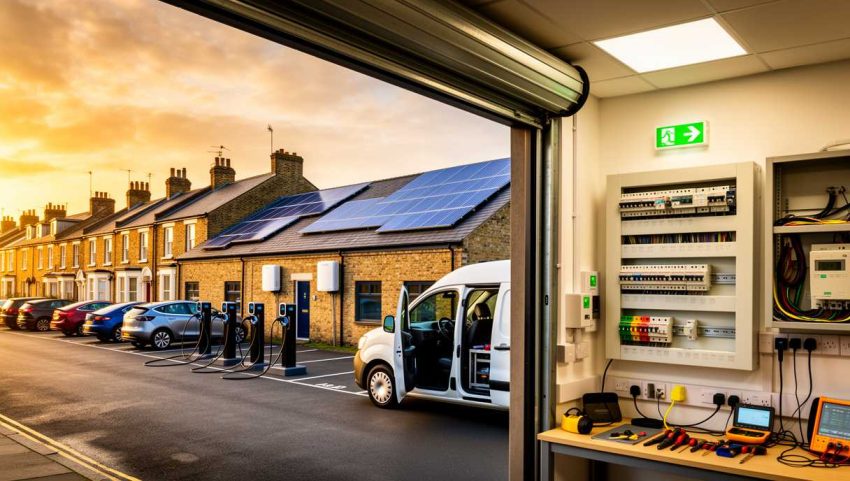
Why battery storage is a timely upgrade for Bedford homes and businesses
The way Bedford uses electricity is changing fast. With more households fitting solar panels, more drivers plugging in EVs, and businesses looking to control running costs, battery storage is becoming the missing piece that ties it all together. A modern battery captures excess solar generation during bright hours and releases it when you need it most—after work, overnight, or during winter evenings—so you buy less from the grid and get more value from every kilowatt you generate. Even without solar, batteries can charge on cheaper off‑peak tariffs and discharge during peak rates to trim bills. For many in Bedford, this simple time‑shifting can smooth out winter spikes and summer surpluses alike.
Local conditions matter. Bedfordshire’s solar yield is solid for the UK, but the long winter nights often force households to import more electricity when prices are highest. That’s exactly when a well‑sized battery shines. By storing daytime solar or low‑cost night energy, you can cover a significant portion of your evening consumption—cooking, lighting, entertainment, and EV top‑ups—without constantly leaning on the grid. If you run a small business in Bedford town centre, Kempston, or on one of the local industrial estates, peak shaving with storage helps flatten demand during busy periods, easing pressure on circuits and cutting exposure to volatile tariffs. The result is simple: steadier bills and better control.
Resilience is another local priority. While Bedford enjoys a reliable network, unexpected outages do occur, particularly during severe weather or planned works. With the right system design, battery storage can provide backup power to essential circuits—heating controls, lighting, broadband, refrigeration—keeping daily life ticking over while the grid recovers. For businesses, maintaining tills, routers and critical equipment can be the difference between staying open and shutting the doors for the afternoon. Properly configured backup mode, tested and documented, delivers peace of mind alongside savings.
Finally, there’s the sustainability win. Storing and using more of your own renewable energy supports local decarbonisation goals and reduces transmission losses from faraway generation. It’s a practical step that turns your home or site into part of a smarter local energy system. Ready to explore options for Battery Storage in Bedford? Knowledgeable, accredited installers can size a solution to your goals, property layout and budget so you see tangible results from day one.
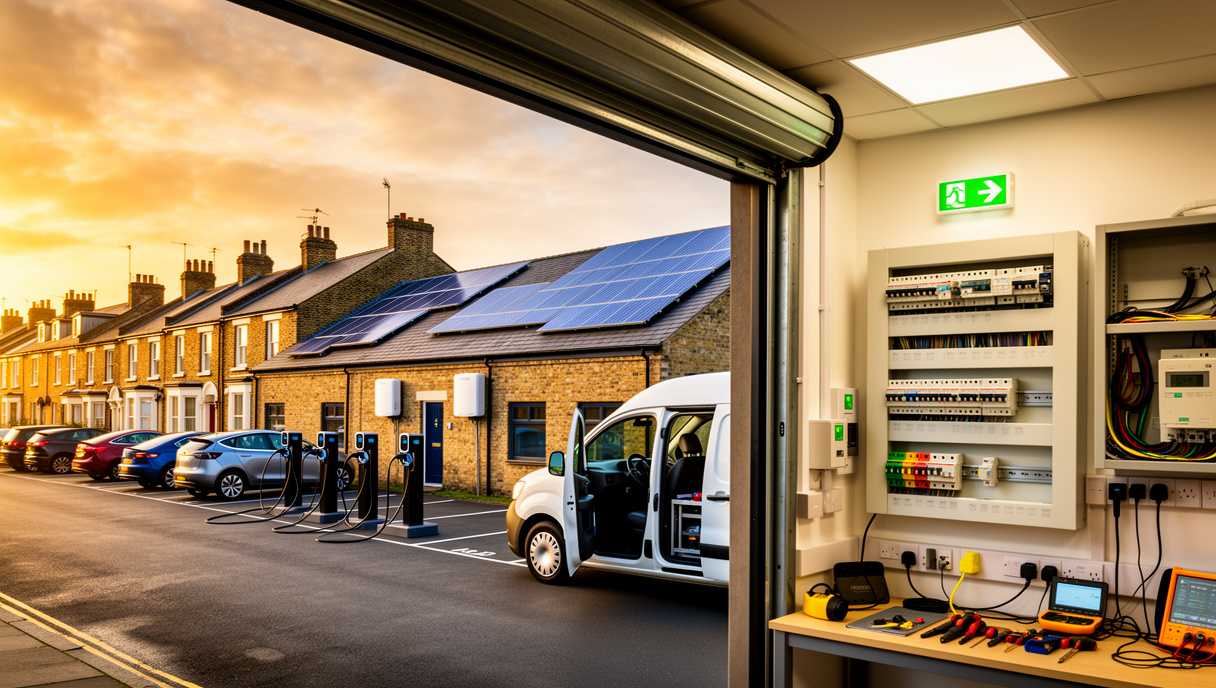
How to choose the right battery system: sizing, safety and installation essentials
Success with battery storage starts with clear objectives. Are you maximising solar self‑consumption, reducing peak‑time bills, adding backup capability, or all three? Your goals inform capacity (kWh), power rating (kW), and whether an AC‑coupled unit or a hybrid inverter (combined with solar PV) is best. As a guide, a typical Bedford home might start around 5–10 kWh of capacity to cover evening usage, while higher‑consumption households or those with EVs may step up to 10–15 kWh. Businesses with three‑phase supplies and machinery cycles often look at modular systems starting from 20 kWh and scaling upward, ensuring the discharge rate can comfortably support peak loads.
Compatibility matters. If you already have solar PV, your installer will check whether your inverter can integrate with a battery or if an AC‑coupled retrofit unit is more cost‑effective. Good systems include smart controls that prioritise solar, manage off‑peak charging, and optimise discharge for tariff windows. App‑based monitoring is standard now, offering live insights into generation, storage state, and consumption. Over a few weeks, you’ll learn how your household or site uses energy and can fine‑tune settings to chase the best savings.
Safety and standards should never be an afterthought. Competent installation in line with the 18th Edition of BS 7671 and relevant connection requirements is critical, particularly where DNO notification or approval is needed. Site selection—garage, utility room, outbuilding or a weather‑appropriate enclosure—balances accessibility with ventilation, clearances and fire safety guidance. Cables, isolators, RCD protection, and appropriate overcurrent devices must be specified and tested. If your consumer unit is aging or undersized, an upgrade may be recommended so the new system is protected and compliant from day one.
Battery chemistry and warranty are key to long‑term value. Many domestic and commercial systems use lithium iron phosphate (LFP) for its robust cycle life and thermal stability. Look for solid warranties (often 5–10 years) with clear cycle and capacity retention guarantees, and consider serviceability—can modules be expanded later as needs evolve? Quality installers will also discuss backup modes: whether you want a whole‑home switchover or a dedicated “essential loads” circuit that keeps only mission‑critical appliances powered during an outage. The latter is often more efficient and cost‑effective, ensuring your stored energy stretches further when you really need it.
Before commissioning, expect thorough testing, documentation, and a handover that explains operational modes, safety procedures, and maintenance checks. Annual inspections or periodic testing can help ensure your system keeps performing at its best, catching issues like reduced capacity or firmware quirks early. With the right design, installation, and follow‑up, Bedford households and businesses can count on dependable, measurable returns from their battery storage investment.
Real‑world Bedford scenarios: savings, backup power and commercial advantages
Every property in Bedford is different, which is why the strongest battery projects start with real usage data and practical goals. Consider a semi‑detached home in Kempston with a 4 kW solar array and a 7.5 kWh battery. Prior to installation, evening imports were high, especially in winter. Post‑installation, the system stores midday solar in summer and tops up on a discounted night rate in winter. Depending on lifestyle and tariff, annual grid imports can drop markedly, while the household enjoys quieter evenings with appliances, lighting and EV top‑ups supported by stored energy. Savings vary, but many Bedford families find that aligning battery charge/discharge with time‑of‑use tariffs unlocks a noticeable reduction in bills.
In central Bedford, a terraced property without solar still benefits from battery storage by exploiting off‑peak electricity. With careful scheduling, the battery charges overnight and discharges during the evening peak to cover cooking, hotspots and entertainment. Add an EV charger and you gain flexibility: lighter top‑ups in the day, deeper charges at night, and a battery that steps in to smooth demand so your main fuse and circuits aren’t over‑stressed. The key is right‑sizing—too small and you’ll run out too early; too large and you’ll pay for capacity you rarely use. Good installers will review meter data, daily routines and appliance loads to target a sweet spot.
Businesses across Bedfordshire—bakeries in Ampthill, studios in Bromham, warehouses on local estates—have their own patterns. A small bakery with ovens and refrigeration might install a three‑phase, 30 kWh system aimed at peak shaving from 7–10 a.m. and 4–7 p.m., stabilising demand and easing costs on dynamic tariffs. If brief power dips risk stock loss or downtime, a battery configured with backup capability can keep critical circuits alive long enough to ride through interruptions. For offices and schools, storage paired with rooftop PV can flatten the midday curve, supporting IT rooms, lighting and ventilation while reducing imported energy during term time. The benefits aren’t just financial: consistent power improves productivity and protects sensitive equipment.
Local siting examples also highlight practical design choices. In Biddenham or Great Denham where garages are common, wall‑mounted units with neat cable runs and clear labeling make maintenance straightforward and keep floor space free. In properties around Elstow or Wixams with utility rooms, discrete indoor placement simplifies ambient control and Wi‑Fi connectivity for monitoring apps. Where outdoor siting is preferred, weather‑ready housings and appropriate clearances maintain safety and longevity. Across all these scenarios, the same fundamentals apply: sound electrical design, clear commissioning, and user training so you actually use modes that deliver savings—such as prioritising solar in summer and off‑peak charging in winter.
As tariffs and technology evolve, Bedford customers can expect even smarter integrations. Think EV chargers that coordinate with your battery to avoid expensive peaks, heat pumps that pre‑heat when electricity is cheap and clean, and automation that responds to weather forecasts. Many modern batteries are firmware‑upgradable, unlocking features over time. A well‑chosen system is not just a box on the wall; it’s a flexible energy hub that supports your household or business as needs change. By focusing on honest sizing, robust safety, and hands‑on optimisation, Bedford residents can capture the best of today’s battery storage while staying ready for tomorrow’s smart‑grid opportunities.

Reykjavík marine-meteorologist currently stationed in Samoa. Freya covers cyclonic weather patterns, Polynesian tattoo culture, and low-code app tutorials. She plays ukulele under banyan trees and documents coral fluorescence with a waterproof drone.