Finding a child care center Alexandria VA families can trust is one of the biggest decisions parents make in the early years. Between licensing standards, curriculum choices, classroom ratios, and daily logistics like drop-off routes and nap schedules, the options can feel overwhelming. Yet the right center becomes more than a place to leave your child—it becomes a supportive extension of your family, a partner in learning, and a nurturing community where your child’s curiosity and confidence flourish. In a city as vibrant and diverse as Alexandria, with neighborhoods from Old Town to the West End and commuting corridors that stretch toward the Pentagon, National Landing, and Fort Belvoir, parents need a center that balances high-quality education with real-world practicality. The following guide highlights what to look for, how a play-based learning approach builds real skills, and which local considerations matter most for busy Northern Virginia families.
What High-Quality Child Care Looks Like in Alexandria, VA
Quality in early childhood education starts with safety and relationships. A strong child care center in Alexandria, VA prioritizes secure entry procedures, thorough background checks, and clean, well-organized classrooms. Look for transparent policies around health, nutrition, allergies, and daily sanitation, as well as a clear plan for emergencies and weather-related closures. Observe how teachers greet children and families; warm, consistent interactions build trust and set the tone for a child’s day. The most effective classrooms have predictable routines—morning welcomes, small-group activities, outdoor play, meals, and rest—giving children the structure they need to feel safe while inviting them to explore.
Teacher training and ratios matter. In Virginia, licensing provides a baseline for safety and staffing, but high-quality programs often exceed those minimums. Ask about teacher credentials, ongoing professional development, and how classrooms are staffed during transitions such as diapering, bathroom breaks, or outdoor time. Low child-to-teacher ratios enable more individualized attention, allowing educators to scaffold learning—gently extending a child’s thinking with questions, vocabulary, and hands-on materials that meet them right where they are developmentally.
Curriculum is another key indicator. The best centers use a play-based, research-aligned approach that integrates early literacy, math concepts, science exploration, and art through engaging activities. For example, sorting leaves on the playground becomes a math lesson in categorization and patterning, while telling stories at circle time builds language and early reading skills. High-quality programs also emphasize social-emotional development, teaching children to recognize feelings, take turns, problem-solve with peers, and develop resilience. Look for classrooms stocked with open-ended materials—blocks, sensory bins, dramatic play props—and a daily schedule that mixes teacher-guided moments with child-led discovery.
Finally, strong communication with families is essential. Whether through a daily report, a family app, or end-of-day check-ins at pick-up, teachers should share observations about meals, naps, milestones, and emerging interests. A center that invites parent input, celebrates cultural traditions, and provides resources for at-home learning creates a true partnership—one that supports consistent growth across home and school environments.
Play-Based Learning That Builds Real-World Skills
When parents hear “play-based,” they might imagine unstructured time. In reality, high-quality play-based learning is intentional, rigorous, and developmentally appropriate. Teachers design experiences that nurture curiosity, creativity, and problem-solving—skills children need for kindergarten readiness and for life. Through play, children experiment, negotiate, observe, compare, build, and test ideas, making abstract academic concepts concrete and memorable.
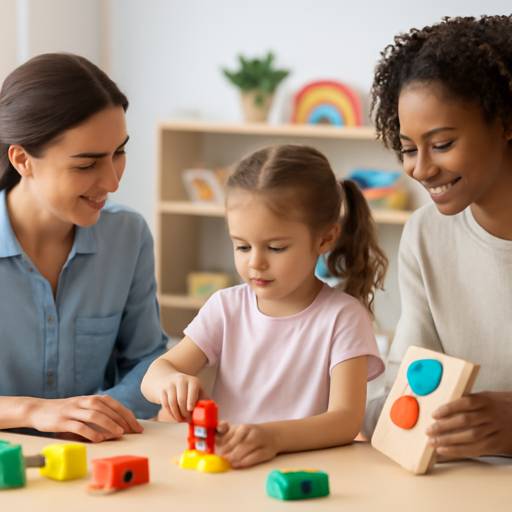
Consider a preschooler building a block city. With teacher-guided questions—How many blocks tall is your tower? Which base is strongest? Can you draw a plan?—that child is practicing early math (measurement, geometry), scientific thinking (hypothesis, test, revise), and language skills (describing, sequencing, new vocabulary). Add signs and labels for streets or “shops,” and you’ve naturally woven in letter recognition and pre-writing. Meanwhile, sharing space and materials invites turn-taking, empathy, and conflict resolution—the heart of social-emotional learning. These are the foundational competencies that prepare children to thrive in kindergarten’s more formal setting.
Play-based classrooms are also rich in literacy. Rhyming games, storytelling circles, and pretend play with menus, tickets, or “doctor’s notes” build phonological awareness, print concepts, and narrative skills. In toddler rooms, fingerplays and songs strengthen memory and language, while sensory tables support fine-motor development crucial for writing later on. Infant environments, designed with cozy corners, mirrors, and safe exploratory materials, stimulate early brain development through responsive caregiving, tummy time, and cause-and-effect play.
What makes this approach so powerful is that it treats every learner as capable. Teachers observe children closely, identify emerging interests, and then weave academic goals into meaningful, joyful play. The result is a classroom where children feel seen and confident—where math is a ramp in the block area, reading is a puppet-led story, and science is watching a seed sprout on the windowsill. A child care center Alexandria VA families love often feels vibrant and alive: laughter in the hallways, children collaborating at easels, and educators who know when to step in and when to let discovery unfold.
Local Considerations for Alexandria Families: Commutes, Neighborhoods, and Practicalities
Alexandria’s geography and commuting patterns shape what families need from early learning. Parents working near the USPTO in Carlyle, federal sites along Eisenhower Avenue, or offices around Old Town may prioritize walkability, stroller-friendly entrances, and proximity to King Street or Braddock Road Metro. Those commuting via I-395, Duke Street, or the GW Parkway toward the Pentagon, National Landing, or Fort Belvoir need efficient drop-off and pick-up logistics, reliable hours, and predictable traffic flow in and out of the parking area. When touring, ask to observe the morning routine; a quick, organized hand-off can save precious minutes during rush hour.
Neighborhoods like Del Ray, Rosemont, Potomac Yard, and the West End each have distinct rhythms. Families in Del Ray may appreciate a center that engages with local parks and small businesses during neighborhood walks, while West End families often value on-site playgrounds and flexible schedules that accommodate varied shift work. Inquire about outdoor play policies—Alexandria’s four-season climate means children benefit from bundled-up winter adventures and shaded summer activities. Look for secure, age-appropriate outdoor spaces and a philosophy that embraces nature as a learning lab.
Hours and calendar alignment matter, too. Confirm how a center handles federal holidays, professional development days, snow days, and early dismissals. If your workday starts early, ask about early drop-off windows, breakfast options, and nap schedules that won’t disrupt evenings at home. Transparency around tuition, sibling discounts, and whether a program participates in the Virginia Child Care Subsidy Program can help families plan. For military or federal families, flexibility and consistent communication are paramount; discuss backup care options and how the center supports transitions if deployments or schedule changes arise.
Finally, prioritize culture and community fit. Alexandria is proudly diverse, and a strong program reflects that in classroom materials, books, music, and celebrations. Seek signs of inclusion—pronounced family engagement, multilingual signage, and invitations for parents to share traditions or careers. Trust your observations during a tour: Do children appear engaged and content? Do teachers get down at eye level, call children by name, and use positive guidance? Are learning artifacts—child-made art, photos of classroom projects, documentation of “what we’re exploring this week”—visible and meaningful? A center that feels welcoming and intentional will support your child’s journey from infancy through preschool with care, excellence, and joy. For families seeking a thoughtfully designed, play-forward environment rooted in local convenience, a trusted option is a child care center Alexandria VA recognized for warm relationships, discovery-led classrooms, and a vibrant, supportive atmosphere that makes education feel like an adventure.

Reykjavík marine-meteorologist currently stationed in Samoa. Freya covers cyclonic weather patterns, Polynesian tattoo culture, and low-code app tutorials. She plays ukulele under banyan trees and documents coral fluorescence with a waterproof drone.