Holistic living is more than a wellness trend; it is a way of seeing and engaging with life that honors the interdependence of everything. Instead of treating parts of ourselves as separate compartments, a holistic approach invites the whole picture into focus—body and breath, thoughts and emotions, relationships and community, soil and sky. It asks a simple question with profound implications: how can each choice support the vitality of the entire system? From heart-centered meditation to mindful stewardship of Mother Earth, the path of holistic living reconnects what has been split apart, revealing a resilient, compassionate, and purpose-driven way forward.
What Holistic Truly Means: From Buzzword to Living System
The word “holistic” often gets reduced to a catch-all for natural remedies or a fusion of yoga and green smoothies. In truth, its roots go deeper. A holistic lens reflects the understanding that the whole is not just the sum of its parts; it is a dynamic pattern where every element influences the others. In health, this means acknowledging how sleep, digestion, movement, beliefs, and social support co-create well-being. In ecology, it means tracing the invisible threads between a city’s air quality, a forest’s biodiversity, and a community’s mental health. In everyday life, it means noticing how one choice—like how we breathe through stress or how we spend our attention—ripples outward into the quality of our connections and the health of our environment.
A practical, lived definition emerges: holistic means living as if relationship is the foundation of reality. Relationship with the self (inner dialogue, body literacy, emotional regulation). Relationship with others (presence, compassion, boundaries). Relationship with place and planet (resources, cycles, reciprocity). Many wisdom traditions center this view, and modern systems science supports it by showing how complex networks adapt and find balance. When a person practices heart-centered awareness, for example, the nervous system calms, creativity increases, and relational conflict softens—impacts that extend beyond the individual to family, team, and community.
Writers and creators who craft from the heart after stillness often describe this integrative experience as “bridging between” the inner and outer worlds. That spirit animates enduring holistic traditions that invite spacious attention, deep listening, and action aligned with values. It also reframes progress: rather than racing toward a finish line, holistic living values rhythm, seasonality, and regenerative cycles. The goal is coherence—an inner and outer consistency that lets purpose, health, and stewardship move together.
Heart-Centered Practices for Everyday Holism
Holistic living flourishes through simple, repeatable practices that anchor awareness in the body and open the heart. Start with breath. A two-minute practice—inhale through the nose for four counts, exhale gently for six—signals safety to the nervous system, supports digestion, and cultivates presence. Pair this with a daily meditation that focuses attention at the heart center: imagine breathing in compassion and breathing out gratitude. Over time, this builds emotional resilience and softens reactivity, transforming how challenges are met.
Movement ties the physical body to this inner steadiness. Whether through slow yoga, tai chi, or a mindful walk, consistent, gentle movement improves posture, lymphatic flow, sleep, and mood. Add a somatic check-in—ask, “Where does my body feel open? Where does it feel tight?”—and respond with supportive micro-actions: stretching the chest after hours at a screen, stepping outside for light, or pausing to sip water and reset posture. These are not luxuries; they are strategies that support the entire system.
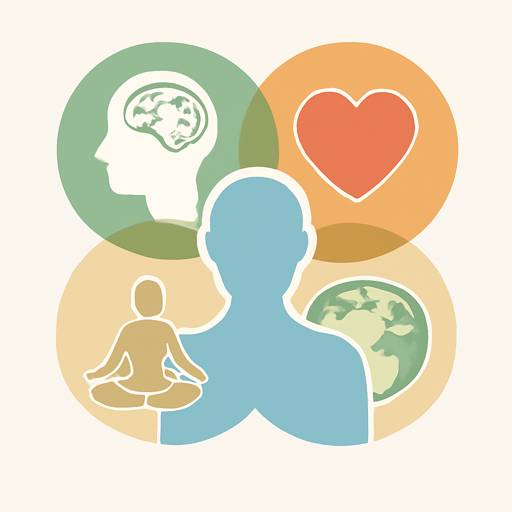
Nutrition becomes a conversation with the Earth. Choose seasonal, minimally processed foods and eat with attention. Savoring a warm, plant-rich meal while seated and unhurried improves assimilation and reduces stress. A brief pre-meal pause—three slow breaths, a thought of gratitude for the hands and habitats that brought the food—turns dining into a ritual of connection. Sleep and digital hygiene matter too: dimming screens at sunset, stepping away from news cycles before bed, and keeping a consistent sleep window support hormonal balance and mental clarity.
Holistic practices are adaptable to circumstance. An urban professional might take a “green micro-retreat,” spending a lunch break under a tree, removing shoes for a moment of grounding, and journaling one insight. A caregiver can use pocket-sized breath practices during transitions. A remote worker can institute device sabbaths and daylight walks. And a community organizer might open meetings with a minute of collective silence, allowing shared intention to arise. Each scenario demonstrates the same principle: small, loving interventions ripple outward, creating coherence across body, schedule, relationships, and environment.
Holistic Communities and Earth Stewardship: Healing Beyond the Self
Holism widens the circle from personal well-being to communal and planetary care. As the heart opens, reciprocity follows: the desire to live in ways that honor Mother Earth and the communities that depend on her. This shift reframes sustainability from sacrifice to relationship. Instead of asking, “What must I give up?” a holistic mindset asks, “How can my life become a gift?” The answers are tangible. Organize a monthly neighborhood cleanup followed by a shared meal. Start or support a community garden that cultivates soil health and food security. Advocate for tree canopy in heat-prone areas, rainwater harvesting, or bike-friendly streets—all practices that nurture both ecological resilience and human well-being.
Consider a simple example from a small apartment complex: residents began hosting sunrise silence in the courtyard once a week, followed by 20 minutes of mindful litter pickup and a brief gratitude round. Within two months, noise complaints dropped, hallway plants appeared, and neighbors who had never spoken began exchanging skills and support. The practice was not grand. It was coherent—aligning inner calm, social connection, and care for place. This is the essence of holistic transformation: small, relational acts that shift the tone of a system.
Economically, holism suggests circular thinking. Repair before replacing. Share tools. Buy local when possible to reduce transport emissions and strengthen community livelihoods. Favor businesses and creators who source ethically and craft with intention. Even the rhythm of celebrations can change—seasonal rituals that honor solstices or equinoxes reattune the community to cycles of light, rest, planting, and harvest. These rituals need not be elaborate. A short poem at dawn, a collective vow to reduce plastic for a month, a neighborhood compost hub—each action becomes a thread stitching personal meaning to planetary healing.
Finally, holistic communities make room for grief and wonder. Climate anxiety and collective stress require spaces where people can feel and process together. A circle that welcomes tears, stories from elders, and children’s questions can transmute fear into courage. Pair that with nature immersion—birdsong walks, star-gazing nights, creek restoration days—and the nervous system remembers connection. When hearts are steady and hands are engaged, stewardship becomes a joy rather than a burden. From this ground, policies and projects gain clarity, and long-term commitment becomes possible, because the work is rooted in love.

Reykjavík marine-meteorologist currently stationed in Samoa. Freya covers cyclonic weather patterns, Polynesian tattoo culture, and low-code app tutorials. She plays ukulele under banyan trees and documents coral fluorescence with a waterproof drone.